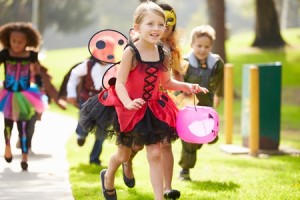
Halloween is an exciting time of year, especially when there isn't snow on the ground. Small towns and big cities alike are full of festivity with plenty of candy, decorations, and princesses walking hand-in-hand with zombies.
Even though it may feel like you're in another world, the same traffic rules apply. Whether you're driving or walking with friends or children, it's important to observe a few simple safety rules:
-
You should drive slower through neighborhoods and stop completely for people in crosswalks, at four-way stops, and at unmarked intersections. There are so many more people out on Halloween that you'll have to increase your awareness of the surroundings in order to prevent a tragic accident.
-
Make sure to also watch for children walking near or in the street.
-
To keep your passengers safe, tell them to enter and exit the car on the curb side of the car in order to stay away from traffic.
As a pedestrian, it's important to remember that roads are just as dangerous on Halloween as they are on any other night. This can be easy to forget when there are so many people walking around the neighborhood and there aren't many cars. To ensure safety:
-
A parent or older sibling should go trick-or-treating with any child under 12.
-
Make sure the older sibling or any older children traveling in a group know how to stay safe while crossing roads.
-
It's important to stop at every corner, and look both ways before crossing the street.
-
Also, no one (child or adult) should ever run between two parked cars into the street.
All of us at Rongstad Insurance Services hope that you have a fun and safe Halloween!
Safety rules courtesy of: Minnesota Safety Council