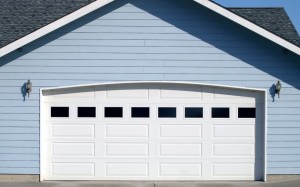
 You probably don't give much thought to your garage door. Yet over the course of a year, your door can go up and down more than 1,000 times! And like any equipment in your home, it can wear out. If you're buying a new home, having a professional check your garage door before you move in can be a great idea. If you're already a homeowner, the U.S. Consumer Product Safety Commission recommends annual garage door safety checks.
Garage doors can be dangerous if they aren't working properly. Each year, more than 20,000 to 30,000 adults and children are injured by garage doors. Most newer garage doors incorporate photoelectric "eyes" that stop and reverse direction in the event a person or object is in the path of the door. This reversing mechanism has been federally mandated in garage doors since the early 1990s. But even the most high-tech garage doors can stop working properly at any time and cause injuries. One way to check if sensors are working properly is to place a roll of paper towels under the pathway of the door and try to lower it. When the door hits the towel roll, it should always reverse direction.
Your garage door also should open and close smoothly. If not, the spring system may need to be adjusted or replaced. Brackets are another issue. They can cause serious injury if they are loose or fall out. Your door's manual release, which disconnects it from the opener, is another important component of your garage door that should be checked. The manual release mechanism is a rope with a red handle. It's an important safety feature that can be used if the door malfunctions during power outages or in the event of an emergency. A professional garage door inspector also can help determine if other components need to be replaced.